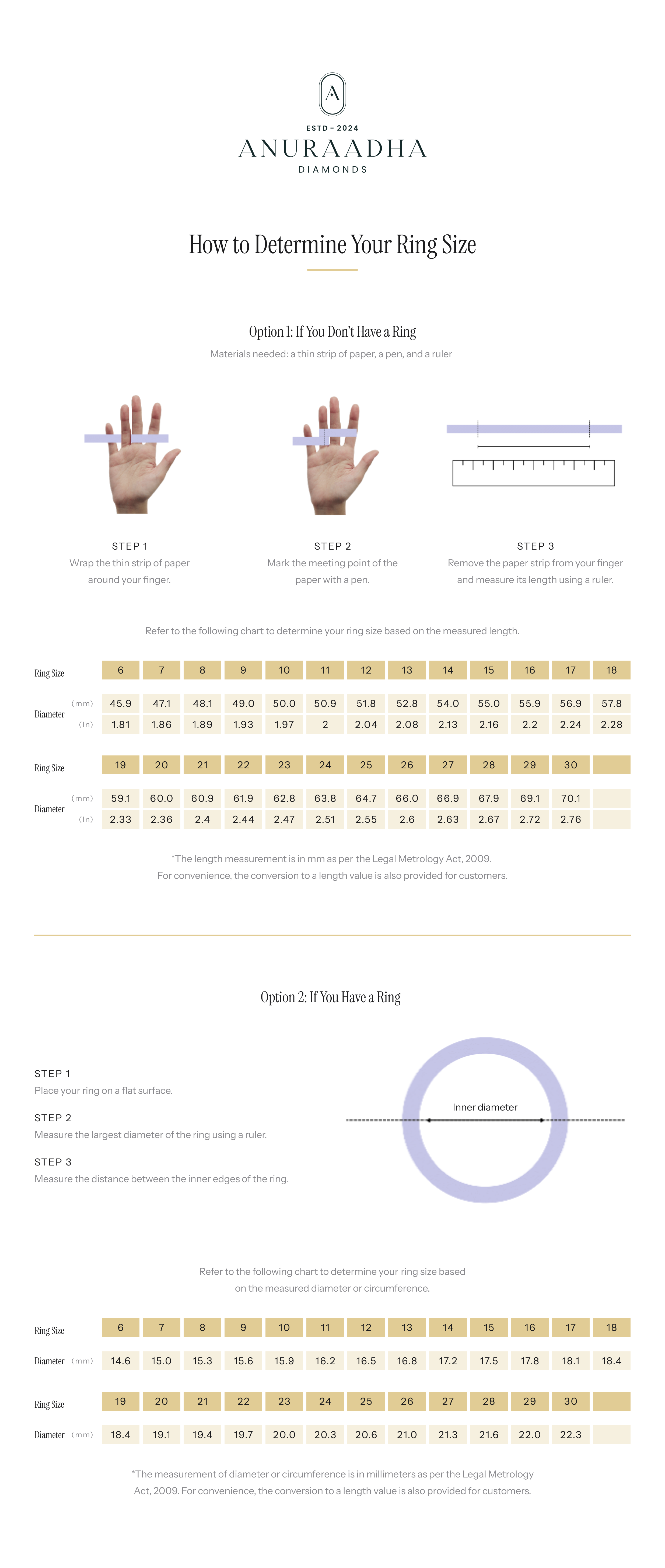
Diamonds are measured in carats, which refers to the weight rather than the actual size of a diamond. This means that the larger the carat, the heavier the diamond will be.
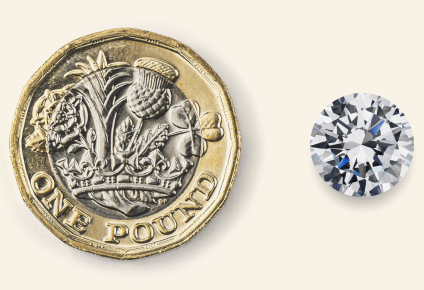
One carat is equal to 0.2 grams, and one diamond carat is divided into 100 points, meaning that 0.25 of a carat is 25 points or ¼ carat. The size dimension of a diamond for its weight is a good indicator of its value and desirability. For example, a 1ct round diamond would ideally measure around 6.5mm in diameter, a 1.5ct around 7.2mm and a 2ct diamond approximately 8mm. Ideal diamond dimensions are different for every diamond shape. Dimensions are a good indicator of how well a diamond has been cut for it to reflect the maximum amount of light.
The value of diamonds per carat can vary massively depending on the other specifications. Carat weight has a large impact on a diamond’s value, along with cut, colour clarity and certification. This means that even two diamonds of the same carat weight will most likely differ drastically in value.
It is important to consider carat and cut together when buying a diamond. A larger carat diamond with a poor cut grade can appear smaller than a diamond of the same size with a higher cut grade.
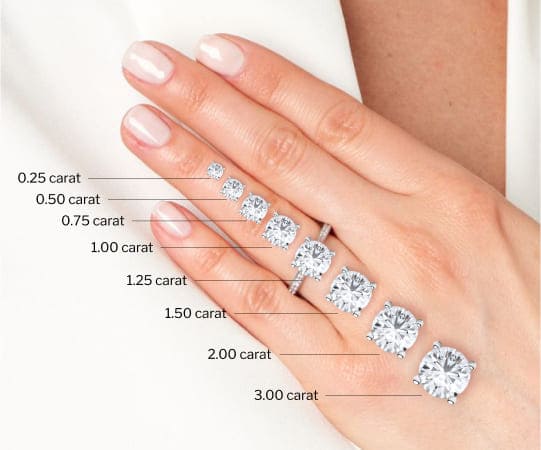
| Carat | Millimeter |
|---|---|
| 0.25ct | 4.0mm |
| 0.50ct | 5.2mm |
| 0.75ct | 5.8mm |
| 1.00ct | 6.5mm |
| 1.25ct | 7.0mm |
| 1.50ct | 7.2mm |
| 2.00ct | 8.0mm |
| 3.00ct | 9.2mm |
All diamonds are all divisible by the method outlined above. Some very rare diamonds can weigh 100 carats or more and be worth many millions of pounds.
Notes
Carat is measurement of WEIGHT, not SIZE and the overall diameter (mm) could differ slighter larger or smaller even through carat weight is correct. Image not to scale. Diamond pictures are shown for comparison purpose only. Actual size can very depending your screen resolutions, monitor size etc.
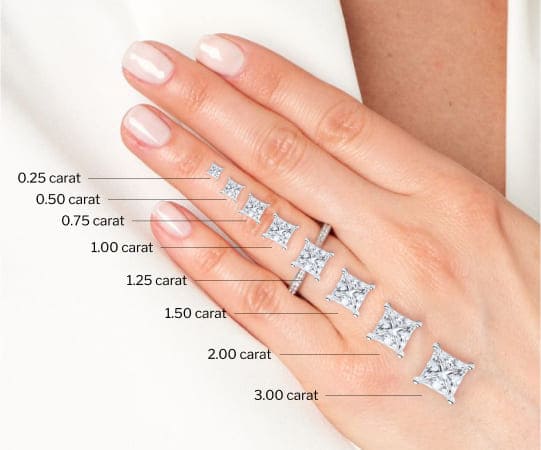
| Carat | Millimeter |
|---|---|
| 0.25ct | 3.3mm |
| 0.50ct | 4.3mm |
| 0.75ct | 4.8mm |
| 1.00ct | 5.3mm |
| 1.25ct | 6.0mm |
| 1.50ct | 6.15mm |
| 2.00ct | 6.8mm |
| 3.00ct | 7.8mm |
All diamonds are all divisible by the method outlined above. Some very rare diamonds can weigh 100 carats or more and be worth many millions of pounds.
Notes
Carat is measurement of WEIGHT, not SIZE and the overall diameter (mm) could differ slighter larger or smaller even through carat weight is correct. Image not to scale. Diamond pictures are shown for comparison purpose only. Actual size can very depending your screen resolutions, monitor size etc.
| Carat | Millimeter |
|---|---|
| 0.25ct | 3.65 x 3.58mm |
| 0.50ct | 4.7 x 4.4mm |
| 0.75ct | 5.78 x 4.76mm |
| 1.00ct | 6 x 5.2mm |
| 1.25ct | 6.6 x 6mm |
| 1.50ct | 6.8 x 6.4mm |
| 2.00ct | 7.3 x 7.2mm |
| 3.00ct | 8.53 x 8.11mm |
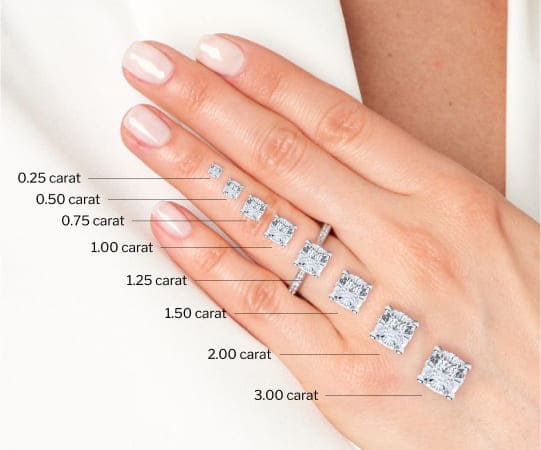
All diamonds are all divisible by the method outlined above. Some very rare diamonds can weigh 100 carats or more and be worth many millions of pounds.
Notes
Carat is measurement of WEIGHT, not SIZE and the overall diameter (mm) could differ slighter larger or smaller even through carat weight is correct. Image not to scale. Diamond pictures are shown for comparison purpose only. Actual size can very depending your screen resolutions, monitor size etc.
| Carat | Millimeter |
|---|---|
| 0.25ct | 5 x 3mm |
| 0.50ct | 5.2 x 3.8mm |
| 0.75ct | 5.89 x 4.25mm |
| 1.00ct | 6.5 x 4.8mm |
| 1.25ct | 7.3 x 5.3mm |
| 1.50ct | 7.6 x 5.5mm |
| 2.00ct | 8.4 x 6.2mm |
| 3.00ct | 9.16 x 7.21mm |
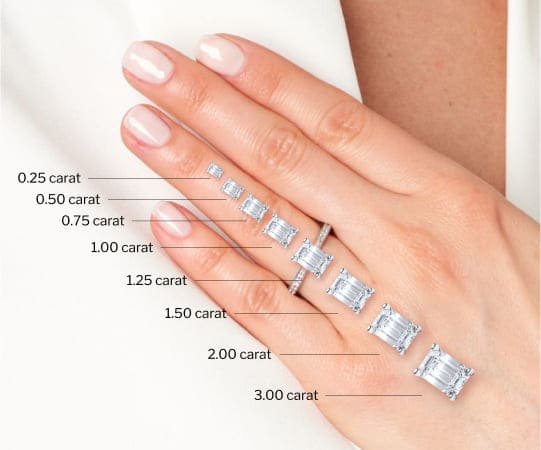
All diamonds are all divisible by the method outlined above. Some very rare diamonds can weigh 100 carats or more and be worth many millions of pounds.
Notes
Carat is measurement of WEIGHT, not SIZE and the overall diameter (mm) could differ slighter larger or smaller even through carat weight is correct. Image not to scale. Diamond pictures are shown for comparison purpose only. Actual size can very depending your screen resolutions, monitor size etc.
| Carat | Millimeter |
|---|---|
| 0.25ct | 5.69 x 3.43mm |
| 0.50ct | 6.8 x 4.45mm |
| 0.75ct | 8.1 x 4.99mm |
| 1.00ct | 8.8 x 5.7mm |
| 1.25ct | 9.5 x 6mm |
| 1.50ct | 9.7 x 6.2mm |
| 2.00ct | 11.2 x 7.15mm |
| 3.00ct | 12.15 x 7.42mm |
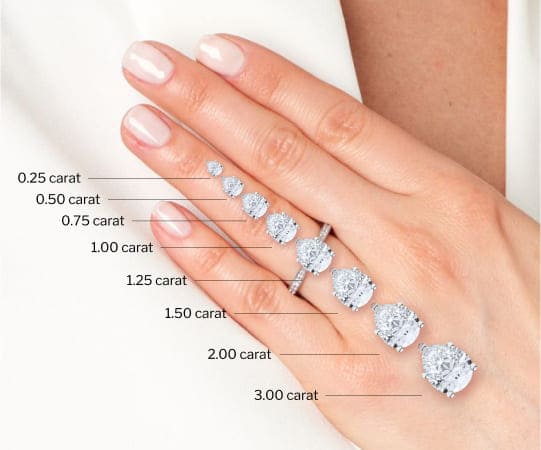
All diamonds are all divisible by the method outlined above. Some very rare diamonds can weigh 100 carats or more and be worth many millions of pounds.
Notes
Carat is measurement of WEIGHT, not SIZE and the overall diameter (mm) could differ slighter larger or smaller even through carat weight is correct. Image not to scale. Diamond pictures are shown for comparison purpose only. Actual size can very depending your screen resolutions, monitor size etc.
| Carat | Millimeter |
|---|---|
| 0.25ct | 5.12 x 3.41mm |
| 0.50ct | 6.3 x 4.4mm |
| 0.75ct | 7.35 x 5.07mm |
| 1.00ct | 7.7 x 5.6mm |
| 1.25ct | 8.4 x 6mm |
| 1.50ct | 8.7 x 6.4mm |
| 2.00ct | 9.7 x 6.8mm |
| 3.00ct | 10.89 x 8.07mm |
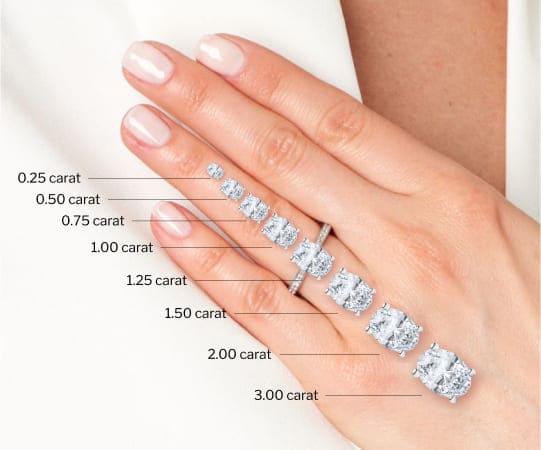
All diamonds are all divisible by the method outlined above. Some very rare diamonds can weigh 100 carats or more and be worth many millions of pounds.
Notes
Carat is measurement of WEIGHT, not SIZE and the overall diameter (mm) could differ slighter larger or smaller even through carat weight is correct. Image not to scale. Diamond pictures are shown for comparison purpose only. Actual size can very depending your screen resolutions, monitor size etc.
| Carat | Millimeter |
|---|---|
| 0.25ct | 3.82 x 3.49mm |
| 0.50ct | 5.3 x 4.2mm |
| 0.75ct | 5.67 x 4.37mm |
| 1.00ct | 6 x 4.9mm |
| 1.25ct | 6.8 x 5.4mm |
| 1.50ct | 7.1 x 5.8mm |
| 2.00ct | 8 x 6.4mm |
| 3.00ct | 9.35 x 7.08mm |
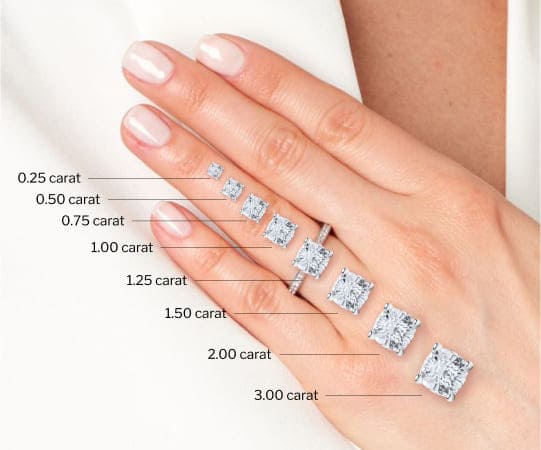
All diamonds are all divisible by the method outlined above. Some very rare diamonds can weigh 100 carats or more and be worth many millions of pounds.
Notes
Carat is measurement of WEIGHT, not SIZE and the overall diameter (mm) could differ slighter larger or smaller even through carat weight is correct. Image not to scale. Diamond pictures are shown for comparison purpose only. Actual size can very depending your screen resolutions, monitor size etc.
| Carat | Millimeter |
|---|---|
| 0.25ct | 3.3mm |
| 0.50ct | 4.3mm |
| 0.75ct | 4.8mm |
| 1.00ct | 5.3mm |
| 1.25ct | 6mm |
| 1.50ct | 6.15mm |
| 2.00ct | 6.8mm |
| 3.00ct | 7.8mm |
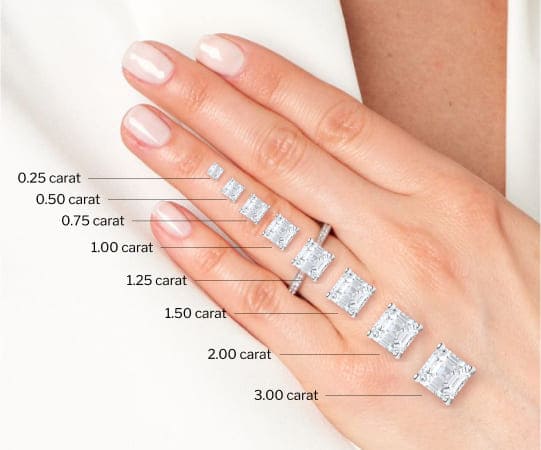
All diamonds are all divisible by the method outlined above. Some very rare diamonds can weigh 100 carats or more and be worth many millions of pounds.
Notes
Carat is measurement of WEIGHT, not SIZE and the overall diameter (mm) could differ slighter larger or smaller even through carat weight is correct. Image not to scale. Diamond pictures are shown for comparison purpose only. Actual size can very depending your screen resolutions, monitor size etc.
| Carat | Millimeter |
|---|---|
| 0.25ct | 6.54 x 3.27mm |
| 0.50ct | 8.4 x 4.2mm |
| 0.75ct | 9.53 x 4.83mm |
| 1.00ct | 10.4 x 5.2mm |
| 1.25ct | 11.65 x 5.6mm |
| 1.50ct | 12 x 6mm |
| 2.00ct | 13.4 x 6.5mm |
| 3.00ct | 14.02 x 7.48mm |
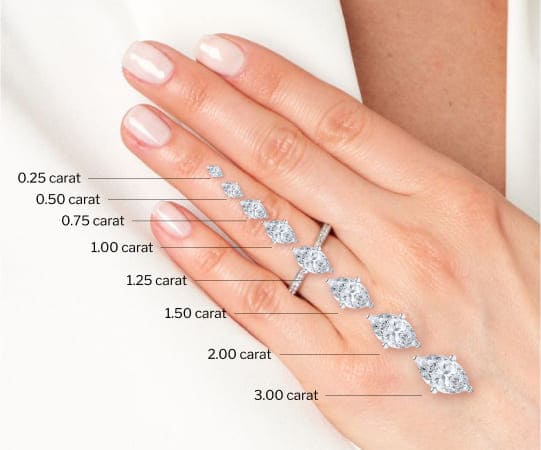
All diamonds are all divisible by the method outlined above. Some very rare diamonds can weigh 100 carats or more and be worth many millions of pounds.
Notes
Carat is measurement of WEIGHT, not SIZE and the overall diameter (mm) could differ slighter larger or smaller even through carat weight is correct. Image not to scale. Diamond pictures are shown for comparison purpose only. Actual size can very depending your screen resolutions, monitor size etc.
| Carat | Millimeter |
|---|---|
| 0.25ct | 3.96 x 4.11mm |
| 0.50ct | 5.5 x 4.6mm |
| 0.75ct | 6.41 x 5.79mm |
| 1.00ct | 6.8 x 5.8mm |
| 1.25ct | 7.8 x 6.6mm |
| 1.50ct | 8 x 6.9mm |
| 2.00ct | 8.8 x 7.5mm |
| 3.00ct | 9.29 x 9.48mm |
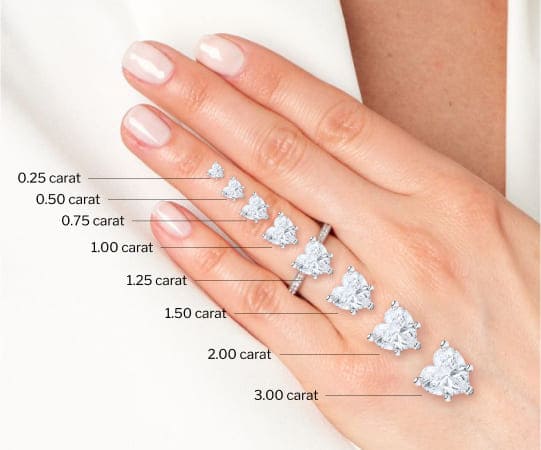
All diamonds are all divisible by the method outlined above. Some very rare diamonds can weigh 100 carats or more and be worth many millions of pounds.
Notes
Carat is measurement of WEIGHT, not SIZE and the overall diameter (mm) could differ slighter larger or smaller even through carat weight is correct. Image not to scale. Diamond pictures are shown for comparison purpose only. Actual size can very depending your screen resolutions, monitor size etc.
To help you choose the perfect diamond carat, we have collated a few top tips
Another important factor to consider is the setting style, as diamonds set in a delicate or slender setting tend to appear larger than those set in a thicker, more solid setting.
It is a good idea to consider the length and width of the ring finger, for example, a diamond will appear larger on longer and slimmer fingers when compared to shorter and wider fingers. Those with shorter fingers may wish to consider diamond shapes which elongate their appearance such as the marquise or pear.
For those on a slightly tighter budget or looking for value for money, a top tip is to look for diamonds which fall just under popular full carat weights - for example, 0.40, 0.90 or 1.75. As these fall just shy of the most sought-after diamond carats, they are often sold at a preferable rate. For example, a 0.90-carat diamond will typically cost less than a 1.00-carat and visually it is difficult to distinguish between the two in size.
You may wish to consider the diamond shape as some shapes can make smaller carats look larger. For example, the marquise and pear shape can appear larger due to its elongated cut.
Anuraadha Diamonds © 2024, All Rights Reserved